
How to Create a Travel Guide: A Step-by-Step Solution
Seasonal Travel
Govoyagenow
Creating a travel guide can seem overwhelming, but with the right approach, it becomes a straightforward and rewarding process. The core solution lies in organizing your content logically, focusing on the traveler’s needs, and ensuring clarity and usefulness. Whether you’re planning a short trip or an extended adventure, a well-structured travel guide can make all the difference in helping others explore confidently and efficiently.
When crafting a travel guide, it’s essential to start by identifying your target audience. Are you writing for budget travelers, luxury seekers, families, or adventure enthusiasts? Understanding your audience helps you tailor the content to their specific interests and needs. For example, a guide for budget travelers might emphasize affordable accommodations and free activities, while a guide for luxury travelers could highlight high-end dining and exclusive experiences.
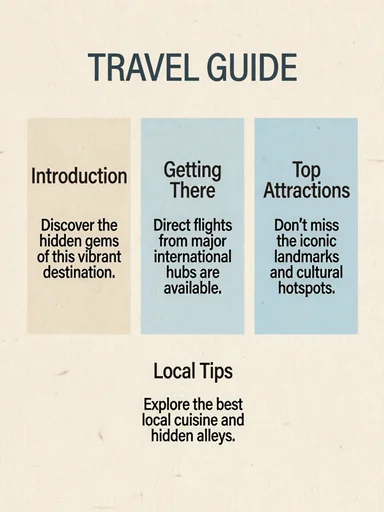
Next, you should determine the structure of your guide. A typical travel guide includes an introduction, destination overview, transportation tips, accommodation recommendations, must-see attractions, local cuisine, and practical tips. However, the key is to keep it concise and easy to follow. Avoid overwhelming readers with too much information. Instead, focus on the most relevant and useful details.
Research is another critical component of creating a reliable travel guide. Gather information from credible sources such as official tourism websites, travel blogs, and local guides. Verify details like opening hours, entry fees, and safety recommendations to ensure accuracy. Additionally, consider including personal experiences or recommendations to add a unique perspective that sets your guide apart from others.
When writing the content, maintain a friendly and approachable tone. Avoid overly technical language and keep paragraphs short for readability. Use bullet points or numbered lists to highlight key information, such as top attractions or travel tips. Including practical advice, such as the best time to visit or how to navigate public transportation, can greatly enhance the value of your guide.
A great way to make your travel guide more engaging is to include real-life examples or case studies. For instance, if you’re writing about a city like Paris, you might share a sample itinerary for a three-day visit, complete with suggested restaurants, museums, and neighborhoods to explore. This not only provides structure but also helps readers visualize their trip and plan accordingly.
Another important aspect is to include practical tips that travelers might not think of. For example, suggest packing essentials based on the destination’s climate, recommend local transportation options, or provide information about cultural norms and etiquette. These small details can make a big difference in the traveler’s experience.
Finally, review and refine your guide to ensure it’s accurate, up-to-date, and easy to navigate. Proofread for any errors and consider adding a section for frequently asked questions (FAQs) to address common concerns. If you’re planning to publish your guide online, make sure it’s optimized for mobile devices and includes clear headings and subheadings for easy reading.




2 Comments
Anonymous
30/07/2026
This guide is incredibly helpful! I followed the steps and created a travel guide for my friends, and they loved it. The tips on structuring the content and including practical advice were especially useful.
Anonymous
30/07/2026
I’m a first-time traveler, and this guide made planning my trip much easier. The section on must-see attractions and local tips was a lifesaver. Thank you for the clear, step-by-step instructions!