
Hiking Tiantangzhai? Here’s How to Explore the Mountain on the Hubei‑Anhui Border
China Travel Guide
Govoyagenow
The straightforward answer is that Tiantangzhai, a mountainous scenic area straddling the border of Hubei and Anhui, is best experienced as a two‑day journey that lets you appreciate both its main peak and the quieter valleys on either side of the provincial line. Most visitors make the mistake of trying to summit the mountain and return in a single day, ending up exhausted and missing the forest trails that reveal the region’s biodiversity. The solution is to choose one side to start from, take the cable car up for the summit views, then spend the second day walking the lower trails that connect waterfalls, ancient trees, and the quiet villages at the mountain’s foot. With a bit of planning around the two provincial entrances, you can discover why this area is called “the last virgin forest of eastern China.”
The biggest mistake is underestimating the scale of the park. Tiantangzhai has two main entrances—one in Hubei’s Luotian County and one in Anhui’s Jinzhai County—and the areas are connected by a ridge trail that can take a full day to traverse. Another common error is visiting on a weekend without a plan for the cable car, which can have queues of an hour or more. The principle is simple: decide which province you’ll base yourself in, take the cable car up for the iconic views, and use your second day to explore the waterfalls and forest trails that are less frequented.
Start by choosing your base. The **Hubei side** (Luotian) is more developed, with a cable car that takes you near the summit, a longer network of paved trails, and a larger visitor center. The **Anhui side** (Jinzhai) feels wilder, with a steeper approach, fewer crowds, and access to the **Longjian Gorge**, a narrow valley with a series of waterfalls. If you have two days, consider staying on one side and using the first day to summit, then driving around the mountain to explore the other side’s trails on the second day.
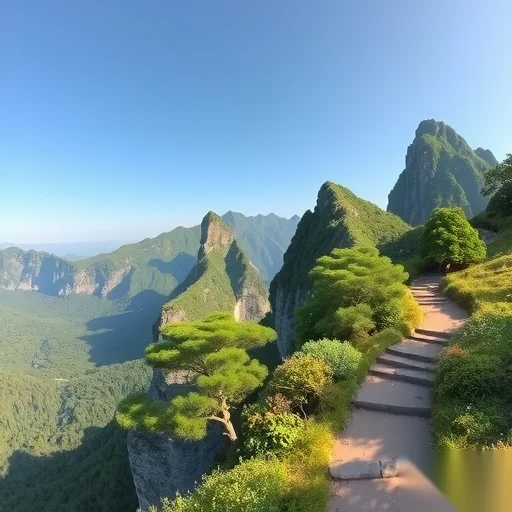
From the **Hubei entrance**, take the cable car to the upper station. The ride offers views of the layered peaks and the dense forest canopy. From the station, a 30‑minute walk along a ridge brings you to the **main peak** (1,729 meters), where a stone marker indicates the Hubei‑Anhui border. On a clear day, you can see the Dabie Mountains stretching in all directions. The ridge trail continues into Anhui territory, but most visitors turn back here to explore the **Zhe’er Peak** area, where rock formations resemble a phoenix spreading its wings.

For the second day, focus on the waterfalls and lower trails. On the **Anhui side**, the **Longjian Gorge** trail follows a stream through a narrow canyon, passing nine named waterfalls, each with a pool at its base. The trail is well‑maintained with wooden boardwalks and stone steps, and the sound of rushing water accompanies you for most of the walk. Allow three hours for a round trip from the entrance. On the **Hubei side**, the **Xiaohua Mountain** area offers a gentler loop through bamboo groves and past a small temple, with views of the main peak from a different angle.
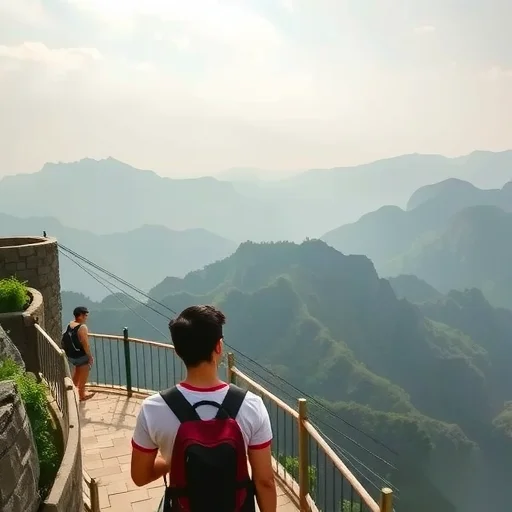
A concrete example: a traveler I know spent two days at Tiantangzhai by basing herself on the Hubei side. On the first day, she took the cable car up at 8:00 AM, walked to the main peak, and spent the late morning on the ridge trails. She returned to the base by early afternoon and rested. On the second day, she drove to the Anhui entrance (about 40 minutes via a mountain road) and hiked the Longjian Gorge trail in the morning. She was back in her hotel by early afternoon, feeling she’d experienced both the summit views and the intimate valley scenery without rushing.
Logistics: Tiantangzhai is about a 3‑hour drive from Wuhan or Hefei. High‑speed trains stop at Luotian Station (Hubei side) or Jinzhai Station (Anhui side); from there, taxis are available to the respective entrances. The park is open year‑round, but the best seasons are spring (April‑May) for wildflowers and autumn (October‑November) for fall colors. Summer can be humid and crowded; winter may bring snow to the higher trails. Wear sturdy hiking shoes, carry water and snacks, and pack layers—the summit can be significantly cooler than the base.
[I did the two‑day plan from the Hubei side and it was perfect. The cable car saves time and energy, but the walk from the upper station to the peak is still a good workout. The border marker is a fun photo. The second day at Longjian Gorge was the highlight—nine waterfalls in one valley, and the trail wasn’t crowded at all on a weekday.]
[We stayed on the Anhui side and hiked the gorge first, then took the cable car up the next day. The gorge trail is beautiful, with pools you can dip your feet in during summer. The summit views are worth the cable car, but if you’re fit, there’s a hiking trail from the Anhui side that takes about 3 hours to the peak—steep but rewarding.]
[I visited in late October and the autumn colors were stunning. The ridge trail from the cable car station to the peak was lined with red and gold leaves. The Longjian Gorge trail was quieter and the waterfalls were full from the autumn rains. A great spot for photographers.]
[The border between the two provinces is the novelty, but the real attraction is the forest itself. The air is clean, the trails are well‑marked, and the biodiversity is impressive. We saw several species of birds and a few monkeys near the gorge. A refreshing escape from the city.]
Tiantangzhai rewards a two‑day visit: one day for the cable‑car‑assisted summit views from either the Hubei or Anhui side, and one day for the waterfall trails (Longjian Gorge) or forest loops, allowing time to appreciate the biodiversity and quiet mountain scenery.
#Tiantangzhai##DabieMountains#FINISHED

4 Comments
anonymous
30/04/2026
I visited in late October and the autumn colors were stunning. The ridge trail from the cable car station to the peak was lined with red and gold leaves. The Longjian Gorge trail was quieter and the waterfalls were full from the autumn rains. A great spot for photographers.
anonymous
30/04/2026
I did the two‑day plan from the Hubei side and it was perfect. The cable car saves time and energy, but the walk from the upper station to the peak is still a good workout. The border marker is a fun photo. The second day at Longjian Gorge was the highlight—nine waterfalls in one valley, and the trail wasn’t crowded at all on a weekday.
anonymous
30/04/2026
The border between the two provinces is the novelty, but the real attraction is the forest itself. The air is clean, the trails are well‑marked, and the biodiversity is impressive. We saw several species of birds and a few monkeys near the gorge. A refreshing escape from the city.
anonymous
30/04/2026
We stayed on the Anhui side and hiked the gorge first, then took the cable car up the next day. The gorge trail is beautiful, with pools you can dip your feet in during summer. The summit views are worth the cable car, but if you’re fit, there’s a hiking trail from the Anhui side that takes about 3 hours to the peak—steep but rewarding.