
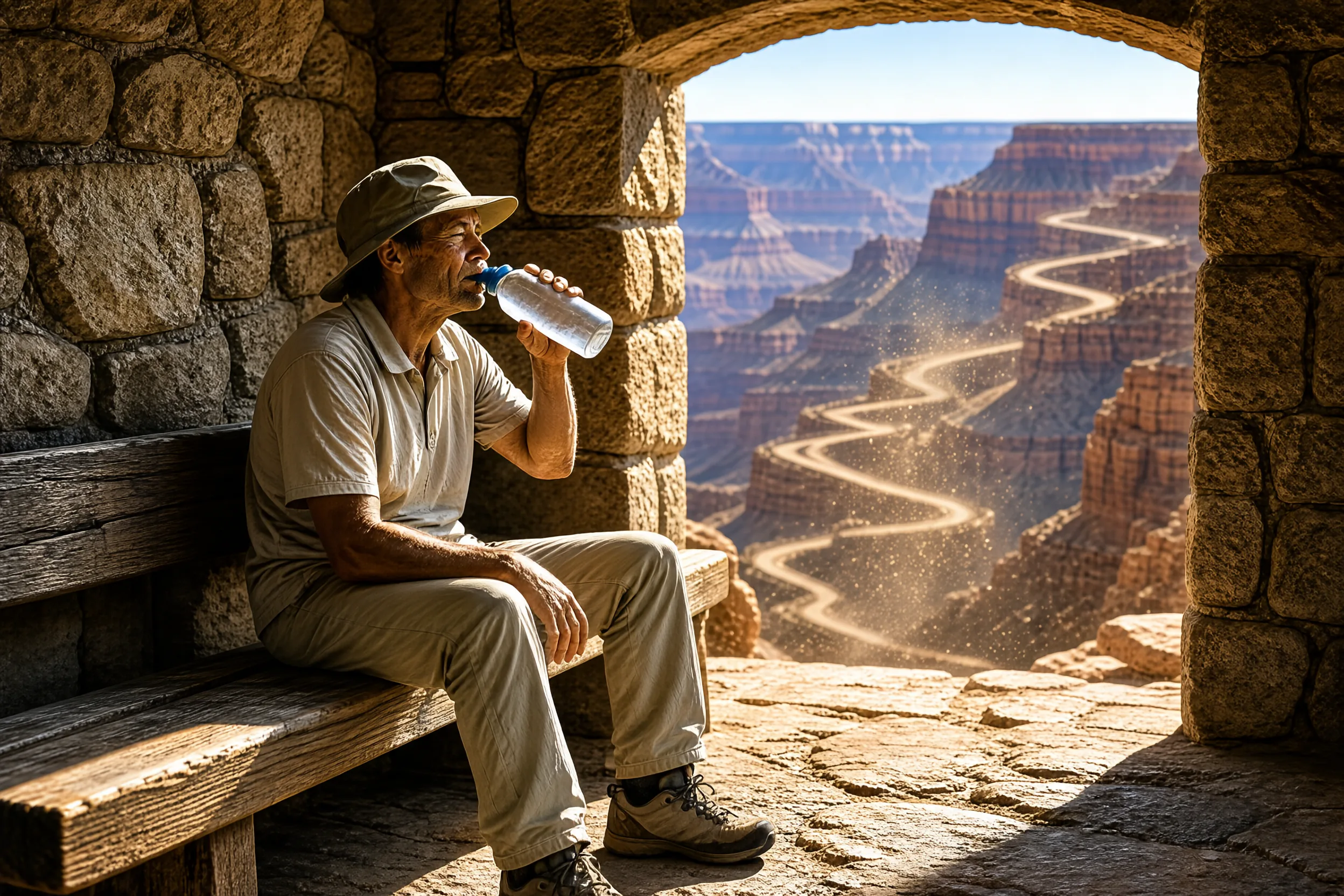
How Far Down Should You Go at the Grand Canyon?
人工智能
Govoyagenow
Most first-time visitors to the Grand Canyon try to do too much. The canyon is 277 miles long, up to 18 miles wide, and roughly a mile deep, yet the South Rim alone packs viewpoints, trails, guided programs, and scenic drives into a corridor you can cover in two or three days[1](@index-ref?id=1)[2](@index-ref?id=2). The single most useful rule when planning things to do in Grand Canyon National Park is to pick a depth — rim, below the rim, or on the water — and match it to your time, fitness, and season rather than chasing every highlight on a list[3](@index-ref?id=3).
That one decision explains why two travelers with identical itineraries report completely different trips. Someone who walks a flat, paved rim path and catches sunset from a shuttle-accessible overlook sees more of the canyon’s changing light than someone who burns an afternoon driving between parking lots. Meanwhile, the descent that looks easy on the map is the one that fills ranger rescue logs, because the climb out comes in afternoon heat, at altitude, when you are already tired[4](@index-ref?id=4).
Rim-Level Things to Do in Grand Canyon That Need No Fitness at All
The rim is not a consolation prize. The Rim Trail runs about 13 miles along the South Rim between the South Kaibab Trailhead and Hermit’s Rest, almost entirely paved or packed gravel and almost entirely flat[5](@index-ref?id=5). Shuttle stops break it into short pieces, so you can walk one section and ride back rather than committing to the whole distance[6](@index-ref?id=6). Start at Mather Point for the classic first look, add Yavapai Point for its geology exhibits and wide panorama, then use the free shuttle along Hermit Road for sunset viewpoints[2](@index-ref?id=7)[7](@index-ref?id=8).
Scenic driving extends the same low-risk experience eastward: Desert View Drive covers roughly 23 to 26 miles along the rim with pullouts every few miles, ending at a 70-foot stone watchtower with a panoramic view[2](@index-ref?id=9)[7](@index-ref?id=10). Fill water bottles in the village first, because most of the Rim Trail has no water along it, and stay behind railings at unrailed overlooks, where nearly all rim falls occur[8](@index-ref?id=11)[9](@index-ref?id=12).
How Far Below the Rim Should a Day Hiker Actually Go?
Pick a turnaround point before you start, not when you feel tired. The National Park Service recommends a three-mile round trip as the outer limit for a summer day hike on the South Rim, with a turn-around before mid-morning10. Bright Angel Trail suits most day hikers because it has rest houses at roughly 1.5 and 3 miles, plus seasonal water and some shade;
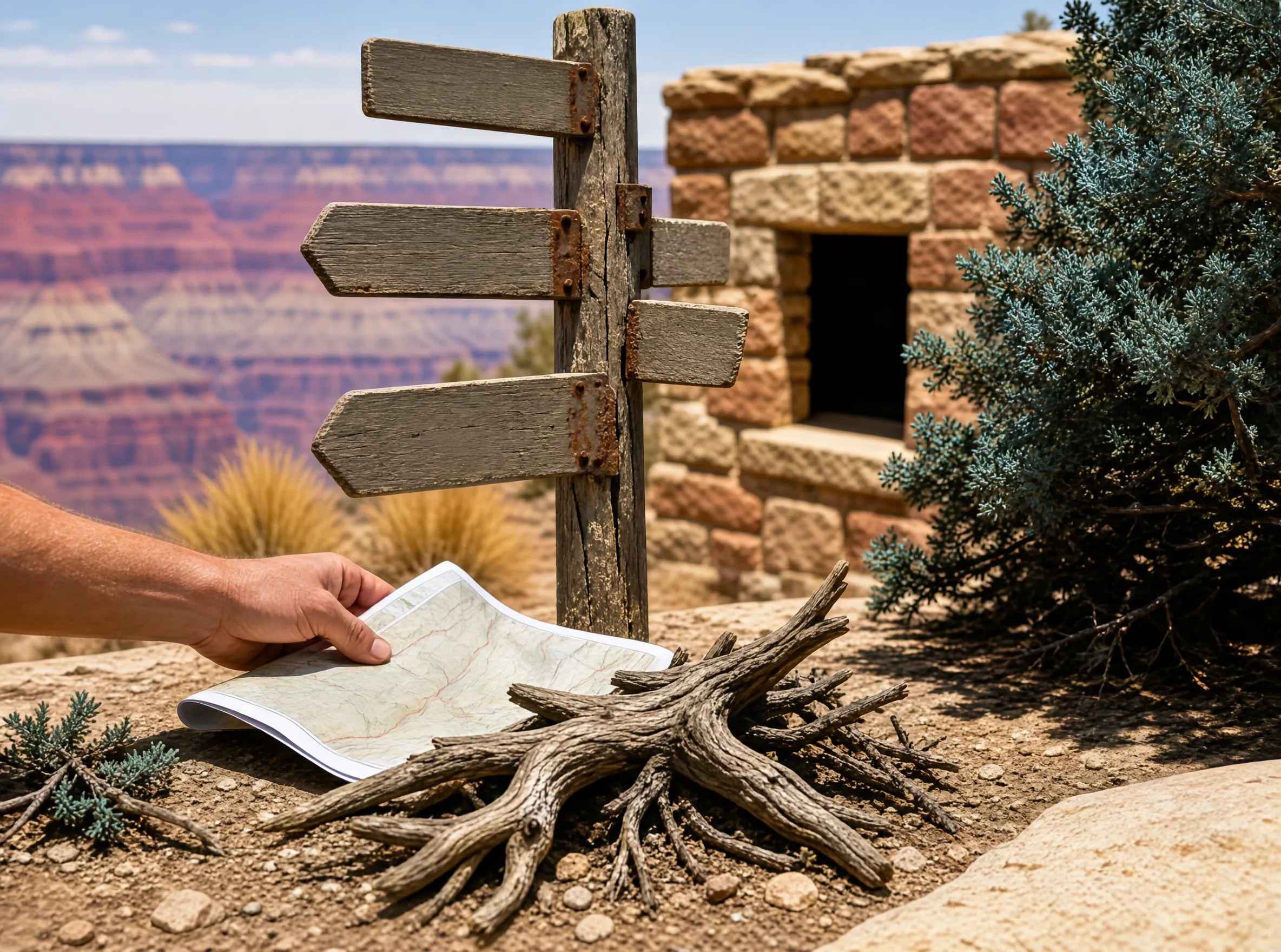
South Kaibab follows an exposed ridgeline with the better views and no water at all below the rim111213.
Sensible goals look like this: 1.5 miles down Bright Angel to the first rest house as a genuine taste of the inner canyon;3 miles down South Kaibab to Skeleton Point for a half-day with dramatic ridge views;
or 4.5 miles down Bright Angel to Havasupai Gardens for a full, demanding day111415. Carry three to four liters of water per person in summer, plus salty snacks, since low sodium from drinking water without electrolytes is the second most common emergency16. Hiking to the river and back in one day is exactly what rangers discourage8.
River Trips, Guided Programs, and Night Sky Viewing
Anything on the water works on a different clock. Commercial rafting trips include the permit and are booked far in advance, while private trips require a permit through a weighted lottery that opens each February for launch dates the following year, with applications closing in late February[17](@index-ref?id=22)[18](@index-ref?id=23)[19](@index-ref?id=24). Lottery odds adjust to your history: a recent trip reduces your chances, unsuccessful applications improve them, and you can name potential alternate trip leaders to raise the group’s odds[20](@index-ref?id=25).
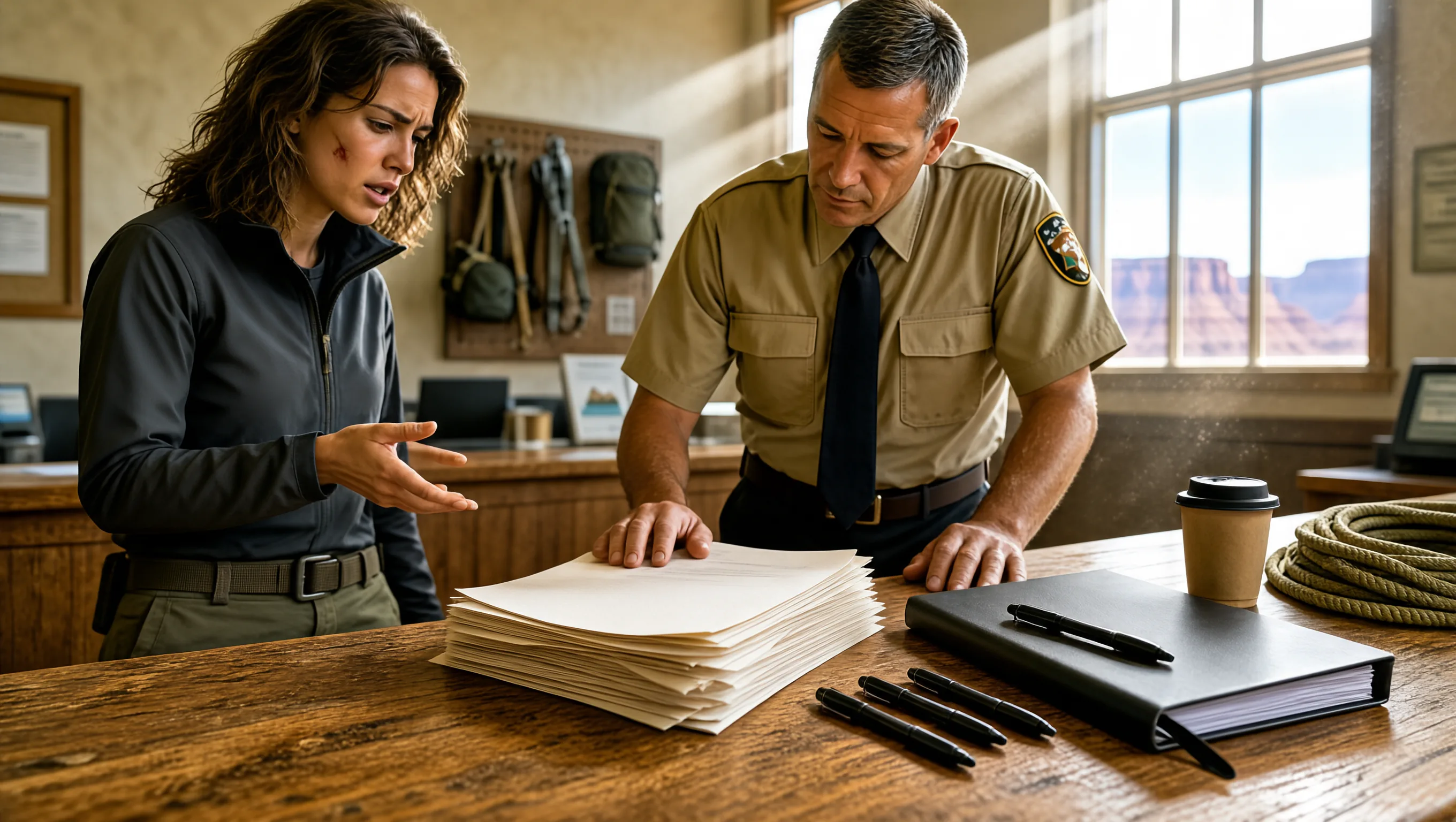
Not everyone needs a permit to go deeper. Free ranger-led hikes, talks, and tours cover geology, fossils, plants, wildlife, and Native American cultures, and family programs let children earn a badge through hands-on activities21. After dark, the park’s certified dark-sky status makes rim stargazing one of the best free activities available;
step out roughly ninety minutes after sunset and look up from any rim viewpoint2223.
Is the North Rim Worth the Extra Drive, and What Should You Check First?
Yes, if solitude matters more than services. The North Rim receives only about ten percent of park visitation and offers cooler, forested viewpoints at higher elevation, but it is seasonal, generally open from mid-May to mid-October[7](@index-ref?id=29)[24](@index-ref?id=30)[25](@index-ref?id=31). In 2026 the North Rim is day-use only after a 2025 wildfire destroyed its lodge and visitor center, with services limited to the general store, gas, and the campground[26](@index-ref?id=32)[27](@index-ref?id=33).
Leave a Comment
You must be logged in to post a comment.